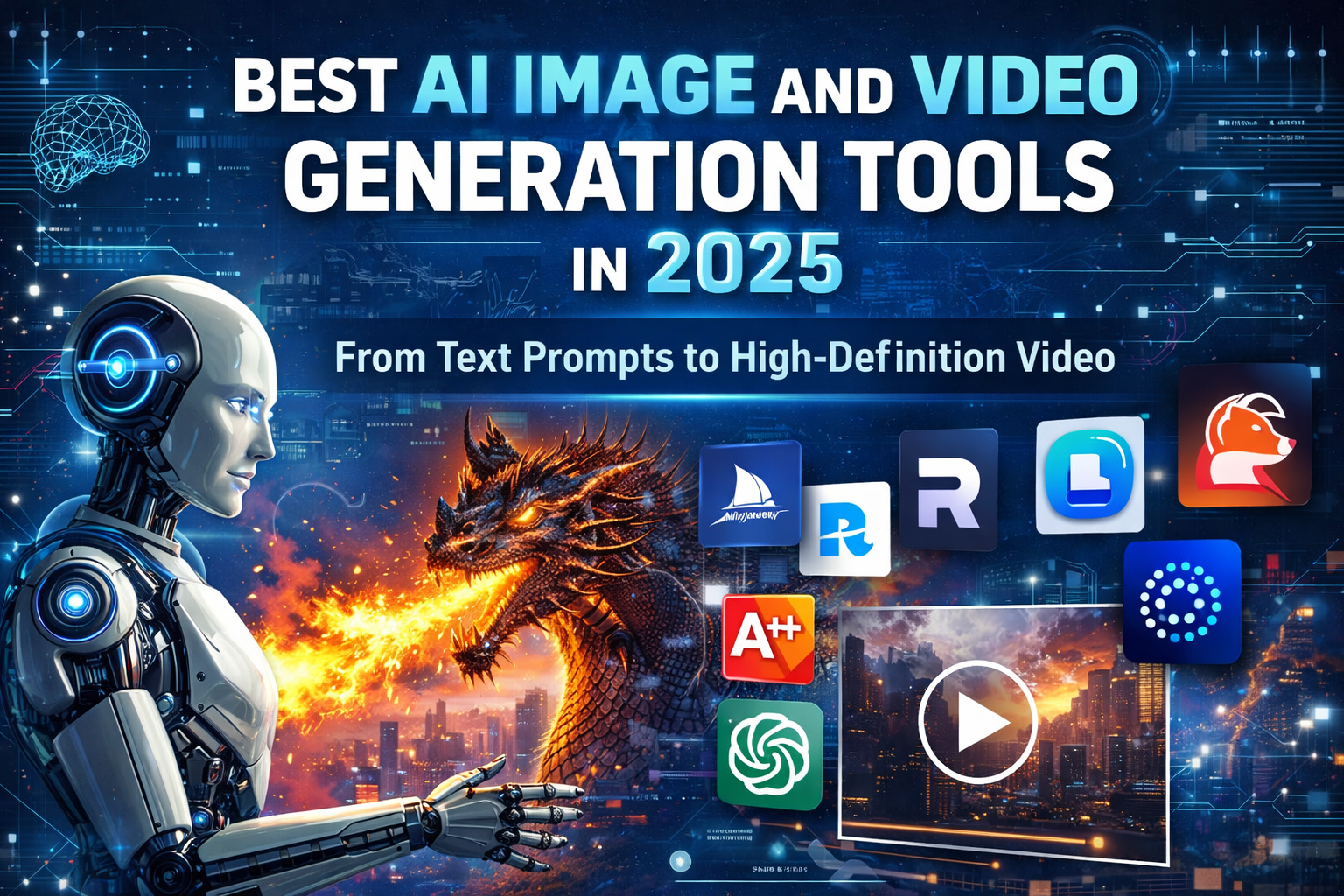

Striking AI visuals are no longer reserved for designers, studios, or tech insiders. In 2025, anyone with a clear idea and the right tools can create cinematic images and transform them into high-definition video content.
From text prompts to animated visuals, the AI content pipeline is now accessible, fast, and surprisingly powerful. Below is a practical overview of the best platforms available today and how they fit together.
Creating AI Images from Text Prompts
ChatGPT
The starting point for strong visuals
ChatGPT plays a critical role at the beginning of the creative process. While it can generate images directly, its real strength lies in helping creators think visually.
You can use ChatGPT to:
- Craft detailed and structured image prompts
- Define mood, lighting, style, and perspective
- Iterate on ideas quickly through conversation
For example, a simple idea like “AI dragon” can be refined into a cinematic scene with specific colors, environment, and artistic style. This clarity dramatically improves results across all image platforms.
Best suited for concept development, prompt refinement, and creative direction.
Midjourney
High-impact artistic visuals
Midjourney is known for producing visually rich and stylized images. It excels at fantasy, sci-fi, and cinematic compositions and is widely used by artists and content creators.
Strengths include:
- Strong aesthetic interpretation
- Dramatic lighting and textures
- Community-driven prompt innovation
Midjourney is ideal when visual impact matters more than technical precision.
Adobe Firefly
Professional and brand-safe generation
Adobe Firefly is designed with commercial use in mind. It produces clean, polished visuals that integrate easily into professional workflows.
Key advantages:
- Clear usage rights for commercial projects
- Tight integration with Adobe creative tools
- Consistent and predictable results
This platform is well suited for marketers, businesses, and creators working on branded content.
Leonardo AI
Control and customization
Leonardo AI offers a higher level of control over image generation. It is particularly strong for character creation, detailed scenes, and storytelling visuals.
Why creators choose Leonardo:
- Fine-tuned style control
- High detail output
- Strong presets for different visual goals
It works well when consistency and repeatability matter.
Turning AI Images into High-Definition Video
Once the image is ready, the next step is motion. These platforms specialize in bringing still visuals to life.
Runway
The most versatile image-to-video platform
Runway allows creators to animate still images, generate video from text, and apply AI-powered motion effects.
Capabilities include:
- Subtle environmental motion
- Camera movement simulation
- AI-assisted video editing
Runway is often the first choice for creators producing professional short-form video content.
Pika Labs
Fast text-to-video creation
Pika Labs focuses on generating short video clips directly from prompts. It is designed for speed and experimentation rather than long-form production.
Best use cases:
- Concept videos
- Social media clips
- Quick visual storytelling
The output is short, but the creative potential is high.
Kaiber
Music-driven animation
Kaiber specializes in animating images in sync with music. It is particularly popular among musicians and creators making visually engaging reels and shorts.
What it does well:
- Beat-based animation
- Stylized motion effects
- Easy image upload and animation
It is ideal for creative and expressive video content.
Synthesia
AI video with narration and avatars
Synthesia is focused on AI-generated presenters and voice-driven video. While less cinematic, it excels in clarity and structure.
Common uses:
- Educational content
- Explainer videos
- Professional presentations
It is best for creators who want structured communication rather than artistic animation.
A Simple AI Image to Video Workflow
A practical workflow looks like this:
- Develop your idea and prompt using ChatGPT
- Generate high-resolution images using Midjourney, Firefly, or Leonardo AI
- Animate the image using Runway, Pika Labs, or Kaiber
- Add sound, text, and polish using a video editor
- Publish in the format that fits your platform
This process allows creators to move from idea to finished video efficiently without specialized technical skills.
Final Perspective
AI has changed the creative landscape. What once required teams, software mastery, and large budgets can now be done with clear thinking and the right tools.
The difference between average and standout AI content is no longer access. It is vision, prompt quality, and workflow.
If you want help creating reusable prompts or building a repeatable AI content system, that is where the real leverage begins.
The dragon is optional. The creativity is not.


Leave a Reply