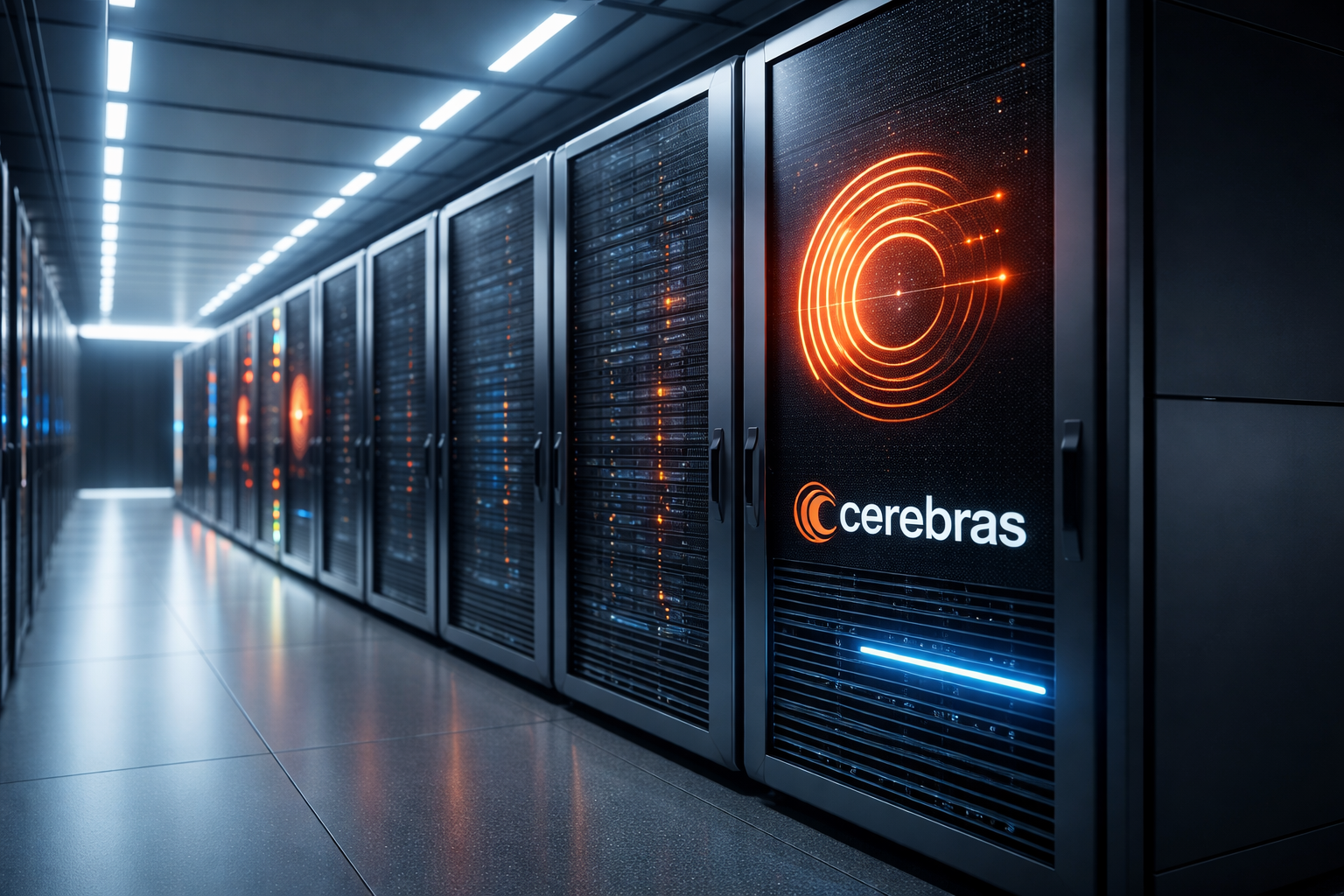

OpenAI is reportedly committing billions of dollars to secure massive compute capacity from Cerebras, one of the most ambitious chipmakers in artificial intelligence. This is not a routine infrastructure upgrade. It is a strategic escalation in the race to build the next generation of AI models.
In an industry where intelligence increasingly depends on raw computational muscle, this deal signals that OpenAI intends to stay firmly in the lead.
Why Compute Is the New Oil
Modern AI progress is constrained less by ideas and more by execution at scale. Bigger models require exponentially more compute. Training runs now consume energy, time, and hardware at levels once reserved for national laboratories.
By partnering deeply with Cerebras, OpenAI is buying more than chips. It is buying velocity. Faster training. Larger experiments. Shorter iteration cycles. In AI, speed compounds.
This is how breakthroughs are manufactured.
Why Cerebras Matters
Cerebras is not just another semiconductor vendor. Its wafer scale engine approach takes an entire silicon wafer and turns it into a single, massive processor. Fewer bottlenecks. Faster memory access. Dramatically simplified training pipelines.
For frontier models, these architectural advantages are not academic. They determine what is possible at all.
This partnership suggests OpenAI is optimizing not just for scale, but for architectural differentiation.
The Strategic Subtext
This deal also reflects a deeper shift in the AI industry. Compute supply is becoming a competitive moat. Cloud access alone is no longer enough. The winners will be those who lock in preferential access to specialized hardware before demand overwhelms supply.
In other words, intelligence is no longer just software. It is infrastructure.
And infrastructure favors those who move early and spend boldly.
Risks and Realities
Multi billion dollar compute bets carry real risk. Model efficiency improvements could reduce brute force requirements. Regulatory pressure on energy usage could reshape incentives. And public scrutiny over concentration of AI power is only increasing.
But standing still is the bigger risk.
In frontier AI, falling behind is rarely reversible.
The Bigger Signal
This move reinforces a growing truth about the future of AI. Progress will not be driven by clever prompts or marginal model tweaks. It will be driven by who can marshal the most compute, the best architectures, and the discipline to turn scale into capability.
OpenAI is clearly preparing for a world where the next leap forward will be expensive, power hungry, and transformative.
Final Take
This is not just a deal about chips. It is a declaration that the next era of AI will be built on industrial scale infrastructure, not incremental innovation.
OpenAI is betting that the future belongs to those who can afford to think bigger.
Given the trajectory of AI so far, that is a very rational bet.


Leave a Reply